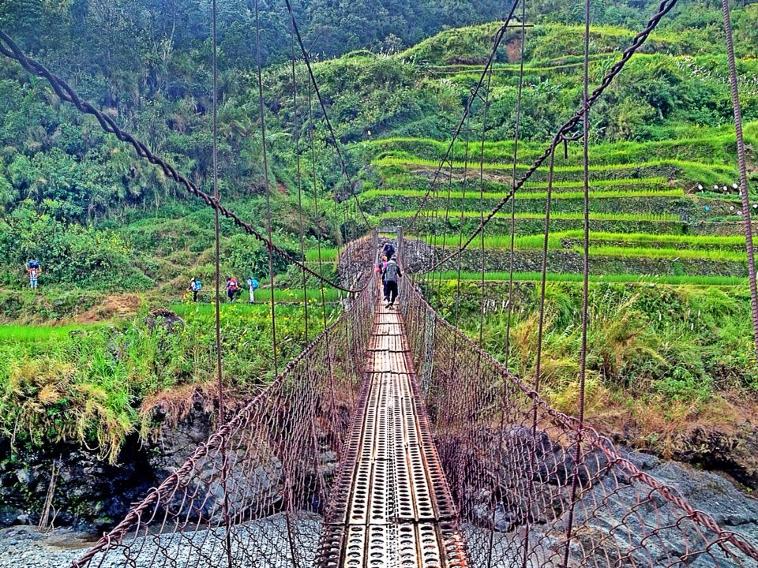
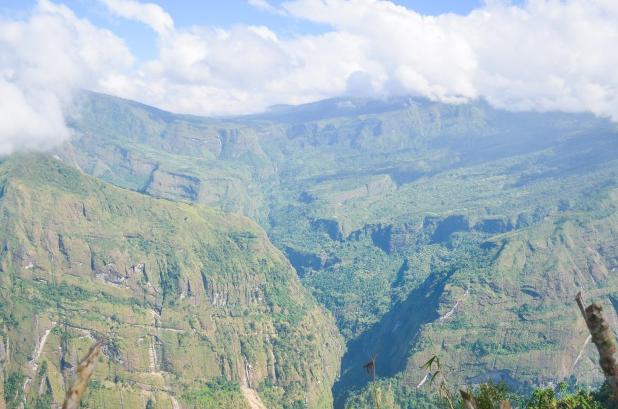
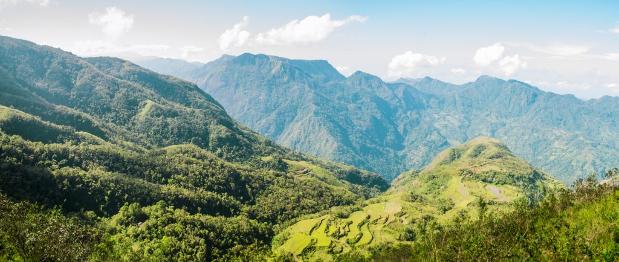
Kibungan was a virgin forest and a sparsely populated area. During those days, the most feared creatures were the so-called “busol” or head hunters. As a result of this head hunting activity, some people of Mankayan, Buguias and Bakun moved southward and settled in the place. Sometime later, an American writer who was fond of adventure went to visit and observe the customs and traditions of the inhabitants. While he was there, he often heard the beautiful sounds of the gongs echoing on the towering rocky mountainsides during cañaos. To him, the sounds gave “kibong-kibong” rhythm. Hence, from the “kibong-kibong” sounds frequently heard, Kibungan’s name was coined.
However, some old folks claim that it was derived from a specie of monkeys called by the natives “kibong” that inhabited the lofty virgin forest several years ago.
Hunting was a major activity during the early days where hunters who reached Kibungan established their home there. More people came in and the population of the place grew.
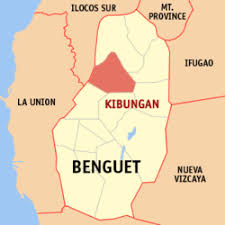
Kibungan has seven barangays, namely: Badeo, Lubo, Madaymen, Palina, Poblacion, Sagpat and Tacadang. One hundred fifty-six sitios compose the whole municipality
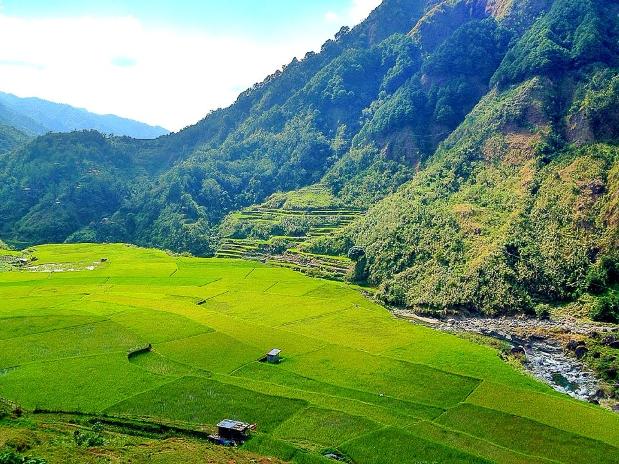
The landscape of barangay Tacadang, Kibungan resembles the Grand Canyon of United States. Sheer and bare rock cliffs and formations dominate its entire landscape. That is why it is also popularly known as the “Switzerland of Benguet.” Today, Tacadang continues to attract flocks of mountaineers and adventurers. It has several peaks for such activities. During rainy months, numerous waterfalls surround Tacadang in almost every direction. Some falls measure up to more than 500 meters high.


Mt. Amanayaw soars to more than 2000 MASL, making it one of the highest peaks in Kibungan, Benguet. Only a few trees and shrubs grow on its summit, thus, it offers a good view of the surrounding mountains, rivers, and other landscapes. On the other hand, mossy forests cover its lower slopes. These feed several brooks and creeks leading to the Amburayan River. Endemic species like cloud rat and civet cat consider these forests home. The trail to Mt. Amanayaw, however, is not yet fully established.
Hot -Man-atong Hand-takkay
Warm -Man-at-atong Leg/Foot-Siki
Cloudy- Manlilibo-o To walk-Mandan
Bright Weather -Mankiyagang Road-Danan
Smooth - Man-nga-utoy To come-Omali
Hard-Makenteg To swim-Langoy
Soft - Manyengpes To think-mannemnem
Long- Ando To fear-Egyatan
Short - Aptik Breast- Soso
Tall - Nakayang Shoulder-Padanga
High - Nakayang Sakati-Grass
Bitter - Manpa-it
Sweet -Mam-is
Fast- Paspas
Slow-Man-in-inayad
Strong - Mabikas
Lonely - Mansasadot
Needs:
- Sibibiyag ay manok(live chicken)
- Sayote(chayote)
- isa ay bukol di repolyo(cabbage)
-asin(salt)
-kaew ay mausar nu man amag si apoy(wood for fire)
- mayat ay pantadtadan sin manok(table for slicing the chicken)
- kaew ay mausar ay pang pang-or sin manok(stick to kill the chicken)
Procedure:
-Man amag kas apoy usarem din kaew ay inurnong mo (Create a fire using the woods)
-idawis mo din manok inggana maabos din dutdut na (get the chicken and roast it into the fire until all feathers are removed)
-ipayag mo sin pantadtadan ta tadtadem din karne di manok (bring the roasted chicken into the flat surfaces and slice the chicken)
-Man aka si banga ay pangi pey-am sin karne ay natadtad (get a casserole and put the sliced chicken meat)
-kargaam si danum din banga uray kagudwa na din banga (put a water at least the half of the casserole)
-ipe-ey mo din karne di manok ibaburek mu inggana medyo nauto din karne asam ipe-ey din sayote,etag adim liplipatan din asin ( put the chicken meat and wait until the meat is half cooked then put the sayote and etag dont forget the salt.)
-manse-ed kas inggana mauuto din pinikpikan (wait until the pinikpikan is cooked)
© Copyright Kibungan Pride
Make a free website with Yola